
The root of many third-world problems lies in corruption, particularly within government systems. Corruption stems from attempting to please oneself or others, resulting in a system that incentivizes no progress and cronyism rather than results. A good example would be how the appointment of the current Myanmar military leader was based on his astrological sign, not his qualifications, ultimately resulting in the widespread suffering in Myanmar we know today.
Corruption erodes trust, stifles innovation, widens inequality and numbs its society. Despite skepticism, I firmly believe that blockchain technology should and will play a role as a solution in rebuilding Myanmar's government systems. The question is, how?
Historically, combating corruption has often relied on the integrity and determination of heroic individual leaders. A recent example is Lee Kuan Yew from Singapore. His anti-corruption campaigns, which included high salaries for public officials and severe penalties for bribery, helped transform Singapore into one of the least corrupt countries in the world. Similarly, how Xi Jinping's anti-corruption campaign in China has led to the investigation and punishment of millions of officials, effectively purging the old ways and setting a new standard.
The Human Error
However, these examples highlight a fundamental flaw in traditional anti-corruption efforts: they rely on people to fight corruption. The irony is that people themselves are susceptible to corruption.
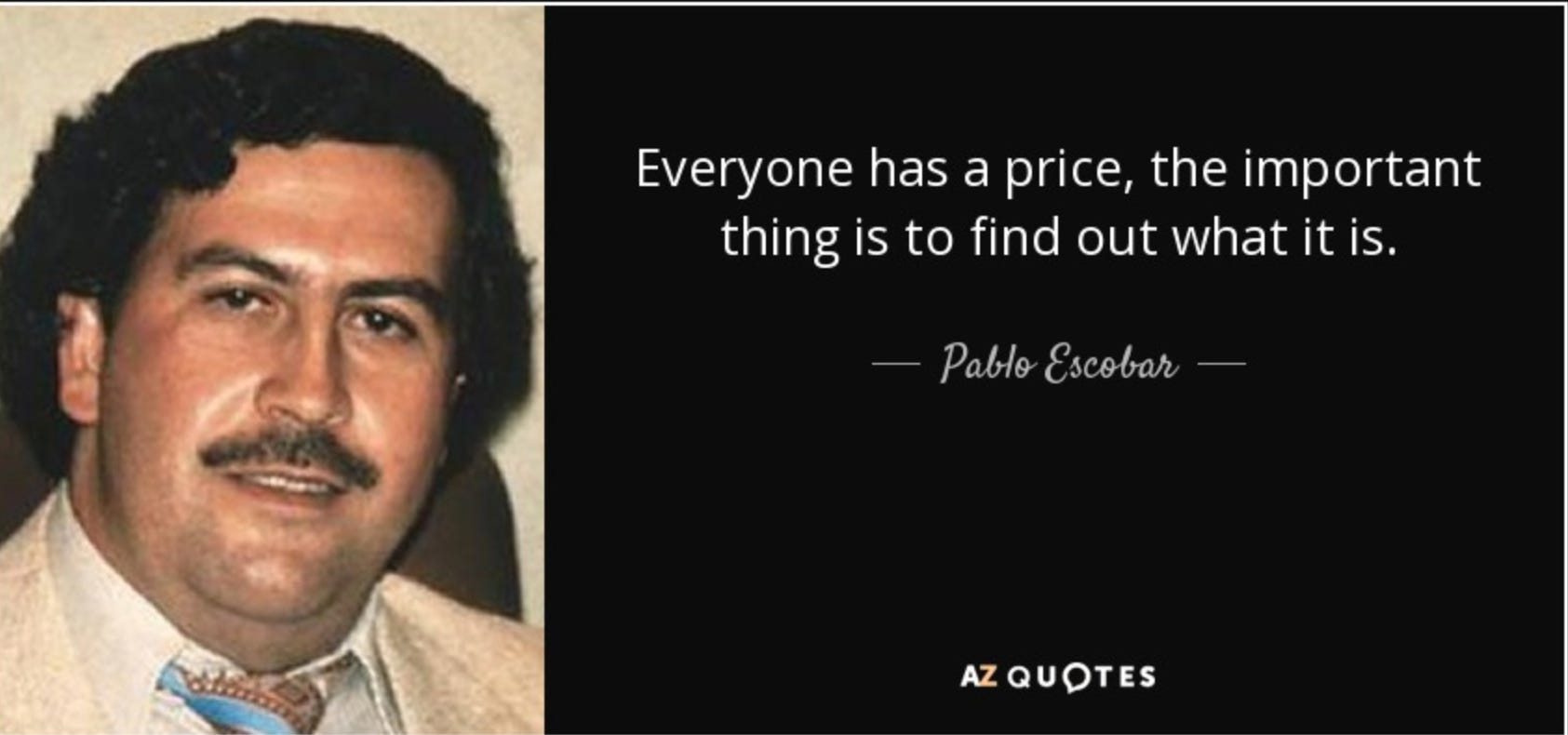
Understanding Corruption as a Game
To understand how blockchain could help, we first need to grasp the insidious nature of corruption. I've come to see it not as cartoonish evil, but as a complex game with bad incentives.
Corrupt actors, from normal workers to high-level ministers, are exploiting loopholes in a broken system. They're responding rationally to a system where the rewards for abuse outweigh the risks. In Myanmar, this plays out at every level:
Corrosion to Corruption
Regular Level
Regular level corruption is often where players start off their journey. In third-world countries, almost everyone plays at regular level. Examples include: Examples include:
Teachers accepting gifts from parents for preferential treatment
Paying bribes to a traffic cop to avoid a ticket
Widespread jaywalking or inappropriate parking everywhere
While seemingly harmless, these “regular acts” plant the seeds for more serious corrupt behavior.
Medium Level
Medium level is where it begins to permeate into the system. Examples include:
Paying someone to take your driving exam (yes, a real thing in Myanmar)
Bribing to skip lines at government offices (yes, also a real thing)
Hiring unqualified relatives or friends
At this level, players know it’s starting to get risky but feel the consequences are minimal.
Hall of Fame Level
HOF level corruption is played by the top echelons of players who know the system inside out and have deep consequences. Notable examples include:
The 1MDB scandal
The Sam Bankman-Fried (SBF) case
The recent large-scale money laundering operation in Vietnam
The Head of the Hydra
As human beings with inherent desires, the temptation to game the system is often irresistible. The answer to redesign the game lies in immediate accountability. Right now, we only find out about corruption when there’s a whistle-blower or when the building that was supposed to be finished 10 years ago is still an empty lot.
Then the big question is how can we incorporate immediate accountability into a system and enforce it onto people? This is where blockchain, a decentralized database system, can play a crucial role.
The Failure of Traditional Systems
Why blockchain specifically? Can't we just do it with normal software databases? The answer is we could, but if we do, we introduce chances for corruption again. In a centralized system, trillions of transactions happen every day, and it is extremely easy for a stakeholder government official to manipulate the data to his benefit without anybody knowing.
Traditional government software systems are old, hard to use, and can only be accessed or used by a few classified internal folks. Trusting a government official not to manipulate the data is akin to trusting a fox to guard the henhouse.
Why Blockchain?
But what if all of the guard dogs were watching the fox 24/7? Would the fox still dare to steal? That's where blockchain comes in. Unlike humans, decentralized open-source technology doesn't have emotions, personal agendas, or susceptibility to corruption. It's just code – immutable, transparent code.
At its simplest, a blockchain is an immutable digital ledger verified by thousands of observers real-time.
Real-World Applications of Blockchain (A Practical Example)
To illustrate how blockchain can be practically implemented to ensure transparency and fight corruption, let's use our upcoming Build Myanmar Community Center in Yangon as an example. We'll walk through our step-by-step plan to integrate blockchain technology into various aspects of the center's operations.
Step 1: Membership and Contribution Tracking
We'll start with the basics: a blockchain-based membership system. Each member will have a simple digital wallet and an NFT that serves as their membership ID. This wallet will track their participation in workshops, volunteer hours, and other contributions to the community.
To start, our Build Myanmar Team admins can track the data, but slowly we can introduce a community app where the members can log in and out. To automate the process of awarding points or tokens for participation, we can use smart contracts. For example, when a member attends a workshop and logs in with their phone, the smart contract automatically verifies and credits their account with the appropriate number of points.
This transparent system ensures that all contributions are recorded fairly. No one can falsely claim more hours or participation than they've actually contributed, and community leaders can't unfairly award credits to their friends or family.
Step 2: Transparent Procurement System
When we need to hire contractors or designers to renovate our physical location, we'll use a blockchain-based procurement system. All bids, contracts, and payments will be recorded on the blockchain. Thus, everyone in the community can see how much we're spending on staff, materials, and services. This transparency makes it nearly impossible for officials to award contracts to unqualified friends or to inflate costs for personal gain. For sensitive financial data, we can use Zero-Knowledge Proofs (ZKPs) to maintain privacy while still ensuring the integrity of the information.
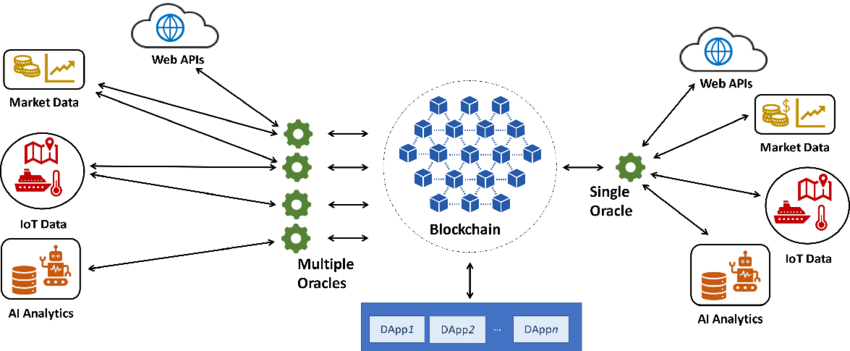
To verify the progress of physical renovation work, we'll implement a system of oracles. Oracles are systems that provide real-world data to blockchain networks, acting as a bridge between the digital world of blockchain and the physical world. In our community center renovation scenario, an oracle could be:
A trusted third-party inspector who verifies that each stage of construction is complete
IoT devices that monitor the progress of construction in real-time
Satellite imagery that confirms the physical progress of the project
Step 3: Decentralized Finance (DeFi) for Community Services
Once our members are comfortable with their digital wallets, we can introduce more advanced financial services. For example, our community cafe could accept cryptocurrency payments, with all transactions recorded on the blockchain. Every transaction is traceable, making it difficult for anyone to skim money or manipulate the books. The community can see exactly how much the cafe is earning and where that money is going.
Step 4: Growth Ecosystem
As our blockchain ecosystem matures, we can introduce a micro-loan system for community members looking to start businesses. Smart contracts backed by AI can automate loan disbursement and repayment based on predefined criteria. We can open-source the smart contracts to ensure the selection process is unbiased. The entire lending process is transparent and automated, eliminating the potential for loan officers to demand bribes or unfairly allocate funds. Every loan and repayment will be recorded immutably on the blockchain.
The Transparent Future
Now, let's zoom out and see how these principles could apply to larger government systems:
Meritocracy Through Transparency: By eliminating corruption, we create a truly meritocratic system. In our community center, this means the most dedicated volunteers and skilled contributors rise to leadership positions. In a government context, this could mean that political appointments and promotions are based on verifiable achievements and qualifications, not personal connections.
Attracting Top Talent: When people see that a system is fair and transparent, it attracts the best and brightest. In our community center, this might mean more skilled professionals volunteering their time. In government, it could lead to more competent individuals entering public service, knowing their contributions will be fairly recognized.
Innovative Problem-Solving: With an immutable system that rewards merit, people are more motivated to innovate and solve real problems. In our community center, this could lead to members developing creative new programs. In government, it could result in more effective policies and public services that actually have an impact.
Building Trust: Perhaps most importantly, technology-based transparency rebuilds trust between citizens and institutions. In Myanmar's government, citizens could trust that their taxes are being used efficiently and public officials are working in their best interests, which is almost unheard of.
Of course, implementing blockchain solutions will be a difficult fight and there will be many questions, such as:
How to protect sensitive data while maintaining transparency
How to ensure the smart contracts themselves aren't corrupted
How to make these systems user-friendly for government officials and citizens alike
Conclusion
Corruption is not just a moral failing; it's a systemic disease that cripples nations. In Myanmar, we've seen how poor leadership choices, influenced by superstition rather than merit, can lead to chaos and suffering. Across Asia, from collapsed infrastructure to stolen healthcare funds, the human cost is immeasurable.
Does blockchain solve everything? Of course not. But it's a start, and an example to build on. As we refine the model in our Community Center, I believe we can make a compelling case for broader adoption in Myanmar's institutions.
Corruption, if left unchecked, will one day destroy our world and attempting these solutions offers far more pros than cons.
The journey from a blockchain-incorporated Myanmar community center to blockchain-incorporated Myanmar government systems may be long, but it's a journey worth taking. Because at the end of that road lies the potential for a fairer, and more prosperous Myanmar that truly serves the people it represents.
May Everyone be Well.
James